





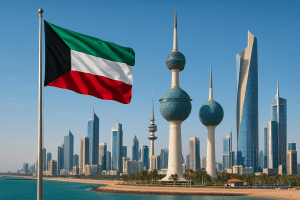





Bahrain aims to frame itself as an appealing hub for technology and financial service businesses amidst an internationally competitive and ever-changing economic landscape, making use of an economic model based around functional efficacy and expense optimization as a core value statement.
As per Ernst & Young’s (EY) recent report, Bahrain distinguishes itself as among the most affordable GCC countries for financial services business, boasting operating costs up to 48% lower than regional averages.
This eye opening number appears not as favorable pricing but instead demonstrates a wider economic strategy to transform potential savings into tangible investments towards workforce and digital infrastructure.
In fact, differences in operational cost are grater than just direct expenses. The report brings to light Bahrain’s offer of up to 85% decrease in yearly business costs and licensing fees as opposed to competing markets in the region. This remarkably lowers the market-entry financial cutoff, allowing emerging ventures and small businesses to introduce projects confidently, simultaneously enabling larger enterprises to allocate capital for basic business activities instead of administrative overhead.
An economic specialist and investment consultant based in Bahrain, by the name of Osama Maayin, stresses the “strategic thinking that goes beyond cost reduction, aiming to deploy these savings in productive areas that enhance Bahrain’s position as a smart financial hub.” demonstrated by this model.
Labor cost advantages
Bahrain also gains a strategic advantage through labor costs, which Bahrain can provide a 24% cut on with comparison to the average in the Gulf. For instance, a fintech company which is charged $100,000 yearly for a mediocre software developer in another city in the region could anticipate paying $76,000 for the same service in Bahrain.
Maayin elaborates on these savings, telling of how they are more than mere price cuts, but enable companies to “expand their teams within the same budget or invest the difference in developing digital infrastructure and innovation.”
Lower rents, higher liquidity
A further economic selling point is the prices of office rentals, which Bahrain can present up to 60% in savings as opposed to other free zones. To illustrate, a company that expends $500,000 a year for their head office elsewhere in the region is offered materially reduced expenses by moving to Manama.
This could serve vital to bettering cash flow, corporate pliancy, and growth capability, specifically for rapidly expanding tech domains.
Integrated and regulated environment
It was noted by Ali Al-Mudhaf, Chief Business Development Officer at the Bahrain Economic Development Board, that Bahrain joins “competitive costs, advanced infrastructure, and flexible regulations” – a triangle that summates the center of the kingdom’s present economic development objectives.
It is also underscored by Al-Mudhaf that the Central Bank of Bahrain benefits the country by serving as the sole regulatory bureau for financial services. This allows the expedition of processes and grants transparency to investors. This centralized regulatory system serves both new and existing establishments, providing a streamline and efficient climate.
Focus on human capital
Among crucial questions presented by Bahrain’s tactic is the matter of ensuring the attraction of high-value jobs despite cost benefits.
Al-Mudhaf replies, “local talent development is the cornerstone,” and further stating that Bahrain hopes to covert savings by funding expertise rather than making quick profits.
This strategy is verified by tried and tested indicators, like the World Competitiveness Report by the International Institute for Management Development (IMD). They placed Bahrain as the fourth and sixth worldwide for skilled labor and digital skills respectively, showing robust human infrastructure which is able to innovate.
International partnerships build confidence
Bahrain’s vision is materialized by agreements with international companies like Citi Technology and JPMorgan, which have pledged to hire 1,000 Bahraini programmers and open 200 new digital banking jobs respectively.
Maayin speaks on these agreements, expressing that “These companies aren’t just looking for lower costs, but for an environment capable of supporting their future operations and accommodating advanced technology.”
The kingdom turns these savings into tools aiding expansion rather than just competitiveness, through various ways like expanding teams, elevated investments in tech solutions, and the pioneering of projects ready for export from Manama to international markets.
Among main obstacles in the way is securing the longevity of this strategy and coordinating the conversion of report figures on paper into real results. The success of Bahrain in directing savings to developing a financial and technological landscape reliant on local innovation could reshape financial services in the Gulf and even begin a new economic model based on higher value for smarter costs.


