






Conflict destroyed one-third of Syria’s pre-war capital — Finance Minister calls for global solidarity
A new World Bank report estimates that rebuilding Syria after 13 years of conflict will cost around $216 billion. The figure highlights the vast destruction across the country’s infrastructure and housing sectors.
The findings are part of the report “Damage and Reconstruction Needs Assessment for Syria, 2011–2024.” It offers a comprehensive nationwide analysis of physical damage to buildings and infrastructure.
One-Third of National Capital Lost
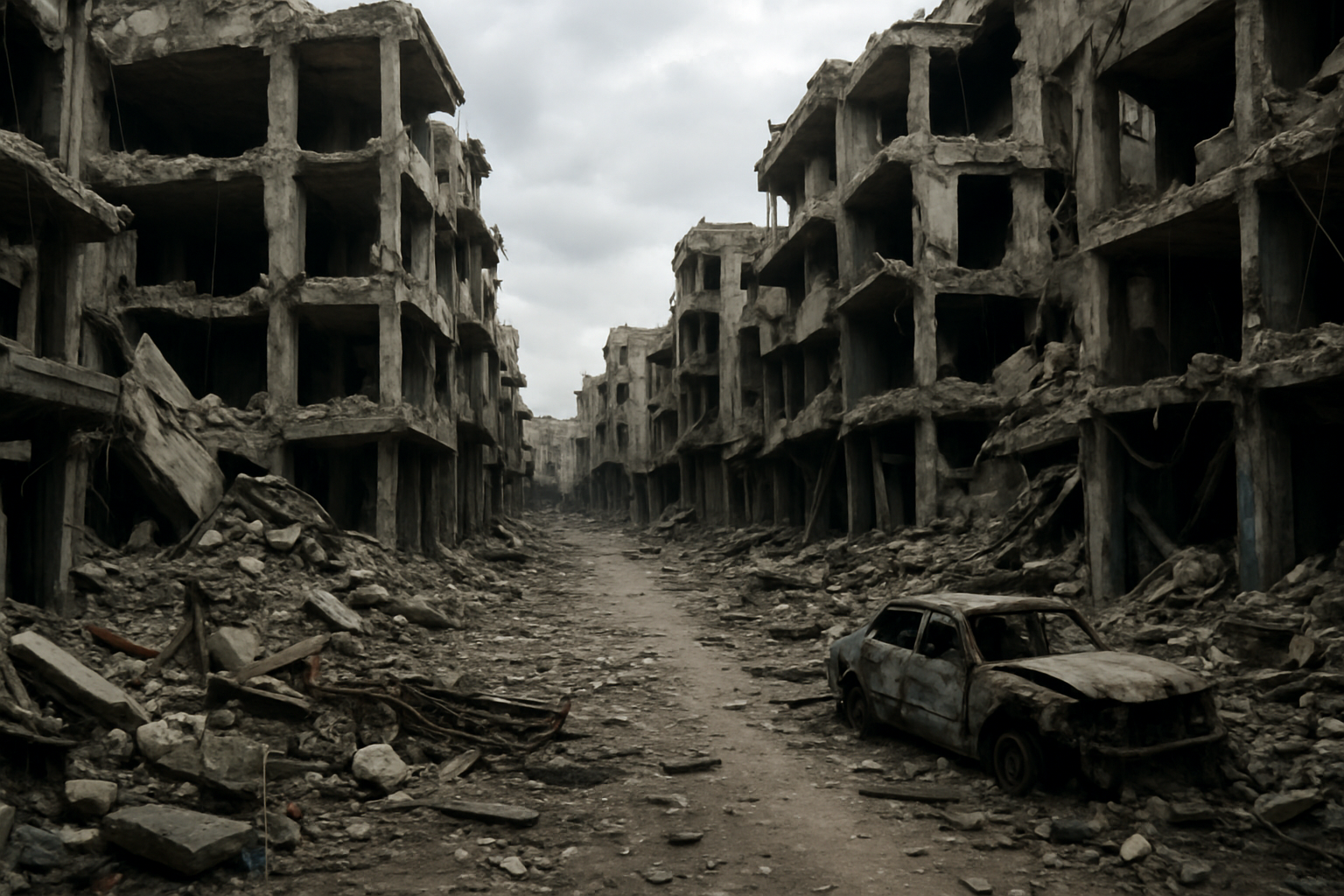
The report shows that the conflict wiped out nearly one-third of Syria’s pre-war capital stock. Direct physical losses reached $108 billion, covering infrastructure, residential, and non-residential assets.
Infrastructure suffered the most, accounting for 48% of the total damage — about $52 billion. Residential buildings followed at $33 billion, and non-residential assets at $23 billion.
At the regional level, Aleppo, Rural Damascus, and Homs were the most severely affected.
Reconstruction Costs Ten Times Syria’s GDP
The World Bank estimates that total reconstruction needs range between $140 billion and $345 billion, with a central estimate of $216 billion. This includes $75 billion for housing, $59 billion for non-residential facilities, and $82 billion for infrastructure restoration.
Aleppo and Rural Damascus will require the largest share of investment. The report stresses that the cost of rebuilding equals ten times Syria’s projected GDP for 2024.
The conflict devastated Syria’s economy. Real GDP fell by 53% between 2010 and 2022. In nominal terms, GDP dropped from $67.5 billion in 2011 to about $21.4 billion in 2024.
Global Support and Cooperation Needed
World Bank Regional Director for the Middle East, Jean-Christophe Carret, said:
“The challenges are immense, but the World Bank stands ready to work alongside the Syrian people and the international community to support recovery and reconstruction efforts.”
He added that collective commitment, coordination, and a structured support program are essential for Syria’s recovery and long-term growth.
Syrian Finance Minister Mohammad Yassar Borneia called the report “a vital foundation for assessing the magnitude of destruction and the challenges ahead.”
He urged the international community to mobilize resources and build partnerships to help Syria restore infrastructure, revive local communities, and secure a more resilient future.
Methodology and Uncertainty
The World Bank warned that the assessment carries a high degree of uncertainty, given the prolonged conflict and limited data. The report aims to provide an indicative estimate of the total damage and reconstruction needs to guide planning and policy dialogue.
The study was prepared with financial and technical support from the Global Facility for Disaster Reduction and Recovery (GFDRR), the World Bank’s program for post-crisis resilience and reconstruction.